Thursday, February 28, 2013

Who Loves to Market Themselves?

Nearly every artist I've talked to complains about how they hate to do their own marketing. If they could have someone else do it, that would be better (but most of us don't have that kind of budget!).

So, you want your work to sell. But, you hate marketing your art. Sounds like a pretty big conflict, doesn't it? It's as though 'sales' and marketing' are dirty words (or, a dirty job).

ArtBiz coach, Alyson Stanfield sums it up beautifully and calls a spade a spade, methinks-in her article titled,

"So You Don't Feel Like Marketing"
(by Alyson Stanfield)


Remember when you were a kid and your mom asked you to clean your room or to pick up your toys?
Remember the wrath that was imposed upon you when you replied to her request with a whiny “But I don’t feel like it, Mom”?
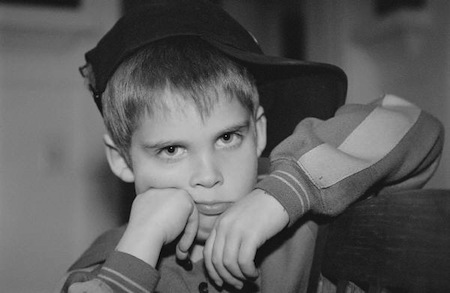
Pouting Boy
It’s time to ask yourself if you’re being your same childlike stubborn self when it comes to marketing your art. Are you avoiding too many marketing tasks because you “don’t feel like it?”
If you are trying to make money from your art, you are responsible for certain tasks that you may not feel like doing.

Sunday, February 17, 2013

Why Didn't I Think Of This?

Sometimes, when you see someone's simple solution to a problem that has plagued you nearly all of your life, you think to yourself, "why didn't I think of that?". Because the solution was so simple and under your nose, so to speak.
Barbara Delaney who writes for "Cloth, Paper, Scissors" magazine shares some of these dirt simple solutions she learned from other artists:


"Thoughts for Thursday: smart tips from clever artists (written by Barbara Delaney):

I am lucky to be able to work with all of the talented contributing artists for Cloth Paper Scissors. Not only do I get to see their art, up close and personal, and learn new techniques, I also pick up some great little tricks along the way.
I decided to share a few of these tips with you.

I learned this  helpful tip from Kari McKnight Holbrook. SO simple . . . and SO smart!
You know those little plastic clips that hold bread bags and the like closed? Kari uses one to keep the end of a roll of tape accessible.
No more searching for the end of any tape roll for me!
I picked up this little tidbit (and lots more!) on Kari's Cloth Paper Scissors Workshop DVD (Backgrounds to Bindings).
Coming soon!


You can read the rest of the article here...


Solutions that are so simple and brilliant. Why didn't I think of that?

Thursday, February 7, 2013

Newbies

Or How to get started as an artist

I've been a graphic designer, website designer and photographer for more than a decade. But I have not attempted to make a living from my photography until this past year. The thought of beginning a career in art is absolutely daunting!

There is a very helpful series of articles on Art Biz Blog about the initial steps to getting started. It is a great read and I'd highly recommend looking for more articles similar to it.

The steps the blog outlines include seriously setting aside time to create and WORK on your art. It is a lot of work to be an artist. Not only do we need to create the actual piece of art, capture the perfect photograph, sculpt the incredible statue, but we also have to do the business side of pricing the art, marketing ourselves and maintaining finances. Discipline is key.

You've heard the adage 'it's not what you know, it's who you know'? Well use your network to begin building your contact list now. This list should have names, mailing addresses and email addresses of past buyers, galleries, fellow artists of differing genres, friends and family and business people - anyone who can assist you going forward with your business as an artist.

Seek out fellow artists and groups of artists, like Rio Rancho Art Association, to commune with. These people should be a mix of genres of art, stages of careers as artists, etc. This helps with the 'been there, done that, wouldn't do it that way again' advice we seek when starting something new. That's part of why I joined Rio Rancho Art Association; to garner the expertise of other artists and get to know the art scene in NM through those who have been part of it for awhile.

Promoting your art without the use of words is futile. Thus we need to begin our art careers, and continue them, by writing. We have to write the artist biography, write the descriptions of the artwork, write the thoughts that are in our heads down on paper or speak them to a voice recorder. If you have no idea what to write, as the Art Biz Blog suggests,  write about others' artwork. Go to a museum or pick one of your favorite artists and write about their work.

I'll be on this journey with the rest of you new career artists (and those of you who need a revamping of your current career). We'll be disciplined, contact-gathering, interactive, literary self-employed artists together! Best of luck.

Tuesday, February 5, 2013

Your website - a living, evolving thing

    An artist updates their body of artwork as often as able, adding new works, revamping and recreating past projects. Artists are always evolving and moving forward.

A website used to showcase a portfolio should be evolving and moving forward too.


    Many of us (myself included) are so focused on creating art that we forget or neglect our websites. The thought of maintaining them with the latest creations and completed or in-progress works of art is just one more thing to add to the mix of the daily tasks. But it is a necessary task to add if an artist is interested in garnering more new and repeat buyers.

So how often should a website be updated?

    Well, ideally as often as there are new works to be shared, or when a piece is sold. It is certainly a best practice to mark a piece as sold on your website so other interested buyers continue to peruse your other works of art.

    If you are unable to update your website with an image and a copyright caption each time a new work is completed, consider setting a timeline and making a date to maintain your site. Every four to six weeks at the most, log in to your site, upload some new images of your latest completed art or work in-progress or simply update your blog or artist statement if it has evolved.

    The web is a living, growing entity and content that is updated more often attracts more repeat users which could lead to more sales and exposure.

Wednesday, January 30, 2013

How Do You Describe Yourself And What You Do?

In a recent article on Linked In, writer, Jeff Haden brought up some interesting points about what not to do in describing yourself. In his list of 16 terms one should not use to describe one's self: things that I hadn't given much thought to, but I'm sure I've done what he advises NOT to do. I think, as artists, we should take a good hard look at our artists statement and evaluate to see if we have used any of these terms (or, terms like it) to describe ourselves and what we do in our art.


"STOP USING THESE 16 TERMS IN DESCRIBING YOURSELF"

by Jeff Haden

"Picture this. You meet someone new. "What do you do?" she asks.
"I'm an architect," you say.
"Oh, really?" she answers. "Have you designed any buildings I've seen?"
"Possibly," you reply. "We did the new student center at the university..."
"Oh wow," she says. "That's a beautiful building..."
Without trying -- without blowing your own horn -- you've made a great impression.
Now picture this. You meet someone new. "What do you do?" he asks.
"I'm a passionate, innovative, dynamic provider of architectural services with a collaborative approach to creating and delivering outstanding world-class client and user experiences."
All righty then.
Do you describe yourself differently – on your website, promotional materials, or especially on social media – than you do in person? Do you use cheesy clichés and overblown superlatives and breathless adjectives?
Do you write things about yourself you would never have the nerve to actually say?"

I encourage you to read the article in its entirety and browse through some of the comments (more than 1,700 weighed in with their comments-and the comments often reveal even more helpful information). Although it is true, that no one is as knowledgeable as you are about what you do, we should give more thought to constructing our descriptions instead of taking a 'confetti' approach. 


Friday, January 25, 2013

Things You Should Know In Regards To Entering Art Competitions

Having been a juror and a curator of art competitions, I can say that there are mistakes that are consistently made by entrants that negates them from becoming a contender in the art competition they are applying for before the reviewing process is done.


According to John R. Marsh, owner of Light Space and Time On Line Gallery, about 30-35% of the submissions for 12 recent art competitions that yielded over 8,300+ images, were missing the mark. In this article, John shares his insights as to how to not only avoid these mistakes (and what they are), but he also gives sound advice as to how to put your best foot forward (so to speak):

"8 Mistakes To Avoid When Entering Art Competitions"
(article written by John R. Marsh)

"The following are some of the most common mistakes that we see each month. When entering any art contest, try to make sure that you are not making some of these common mistakes when entering juried art calls and juried art competitions:
1. Thoroughly Understand the Competition’s Theme & Allowed Media
Understand what the art organization (who is running the competition) wants from the artist. If the prospectus or rules state that the competition is for 2 dimensional art, do not submit your jewelry, sculpture or crafts. If it says no photography, do not expect the organization to provide to you an exception. There are numerous other venues and organizations who are conducting calls for your type of art.
If you have any questions or concerns about the theme or what is acceptable media, contact and discuss this with the organization’s event staff first, prior to submitting your art. You can save yourself and the event staff a lot of trouble, wasted time, effort and money."  YOU CAN READ THE REST OF THE ARTICLE HERE.

The advice the Mr. Marsh shares with his audience in this article is one that all artists should sit up and pay attention to. I would also add that if you are not willing to learn how to photograph your images properly and prepare them for submission, then, for heaven's sake, hire a professional to do it! If you don't know of one, ask around amongst fellow artists and see which name is used the most and go with that one. Especially if your work is 3D-it is very difficult to photograph 3D art objects properly. I would advise on not taking a DIY approach to this. 

I've heard artists complain about the art work that wins the overall competition (as in, 'why did that one win?')-trust me, a lot of this has to do with submitting a good quality image of your work to begin with. When it comes to on line entries, the juror can only go by what they see in front of them. More and more art competitions are done by on line submissions, so if you want your best shot at any of these, be very mindful about following the submission guidelines and submitting the best image representation of your work.

Thursday, January 17, 2013

Photography, The Internet, Copyright issues, Oh, MY!


From the blog, "Plagiarism Today" comes a great article that grapples with the myriad of complex issues that photographers today face amidst the landscape of the internet, social media, and other platforms:


The Challenge Faced by Photographers

Photographer ImageEvery type of content creator faces serious challenges these days.
Writers are plagiarized, spammed and scraped constantly online while the fledgling eBook market faces serious piracy challenges. Filmmakers face obvious piracy issues and are having to depend heavily on box office revenuesdue to a shrinking DVD market. The music industry’s downfall is well-documented as piracy and a shift to digital has deeply cut into sales.Despite recent gains, music sales are still down considerably from just ten years ago.
No matter what copyright industry you look at, the Internet has provided both great opportunities and severe challenges. READ MORE HERE...